Quick Studies: one artist's journey
I didn't come to quick studies as a beginner's exercise. I came to them because my finished paintings were starting to die.
It happens slowly. You give a picture enough hours and you begin to fix things: tightening an edge, correcting a proportion, smoothing a passage that was alive when it was rough. Each decision is reasonable. Together they sand the life out of the thing. I'd step back from a "finished" canvas and find it correct and lifeless, and I couldn't always say where it had gone wrong, only that the version I'd had two days earlier had been better.
Quick studies were how I taught myself to stop. The rule is brutally simple: pick a subject, set a timer, and when it goes off you're done, twenty minutes, sometimes less. There isn't time to fix anything. There's only time to find the essential shape, the right value, the one gesture that carries the whole pose, and then you're out. You learn, against every instinct, that the rough version was the painting.
What surprised me was how much they taught. A failed study costs you twenty minutes, so you can afford to fail constantly, and failing constantly is how you actually find the edge of what you can do. Working general to specific (blocking the big shapes and values first, details last, often never) stopped being a technique I'd read about and became the way I see. After a few hundred of them, the habit of looking for the structure first followed me back to the long paintings.
That's the real journey: not from slow work to fast work, but from control to trust. Quick studies don't replace the finished pictures. They keep the finished pictures honest: they're where I remember, again and again, that a painting is most alive at the moment just before I'd be tempted to perfect it. Now the discipline isn't learning to render. It's knowing when to put the brush down.
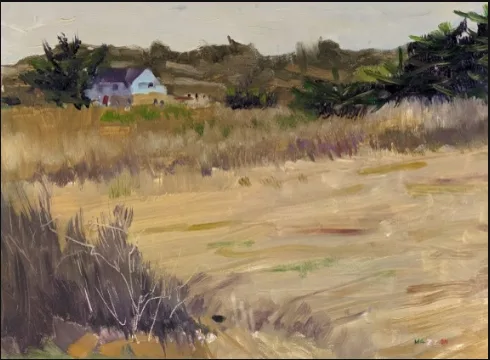
Featured Artwork
Halfmoon Bay
Own a piece of Massimo's work. Currently available for purchase.
View Painting